Waste Heat Recovery Feasibility Study at North Middlesex University Hospital
Feasibility Study
Complete
15 May 2025
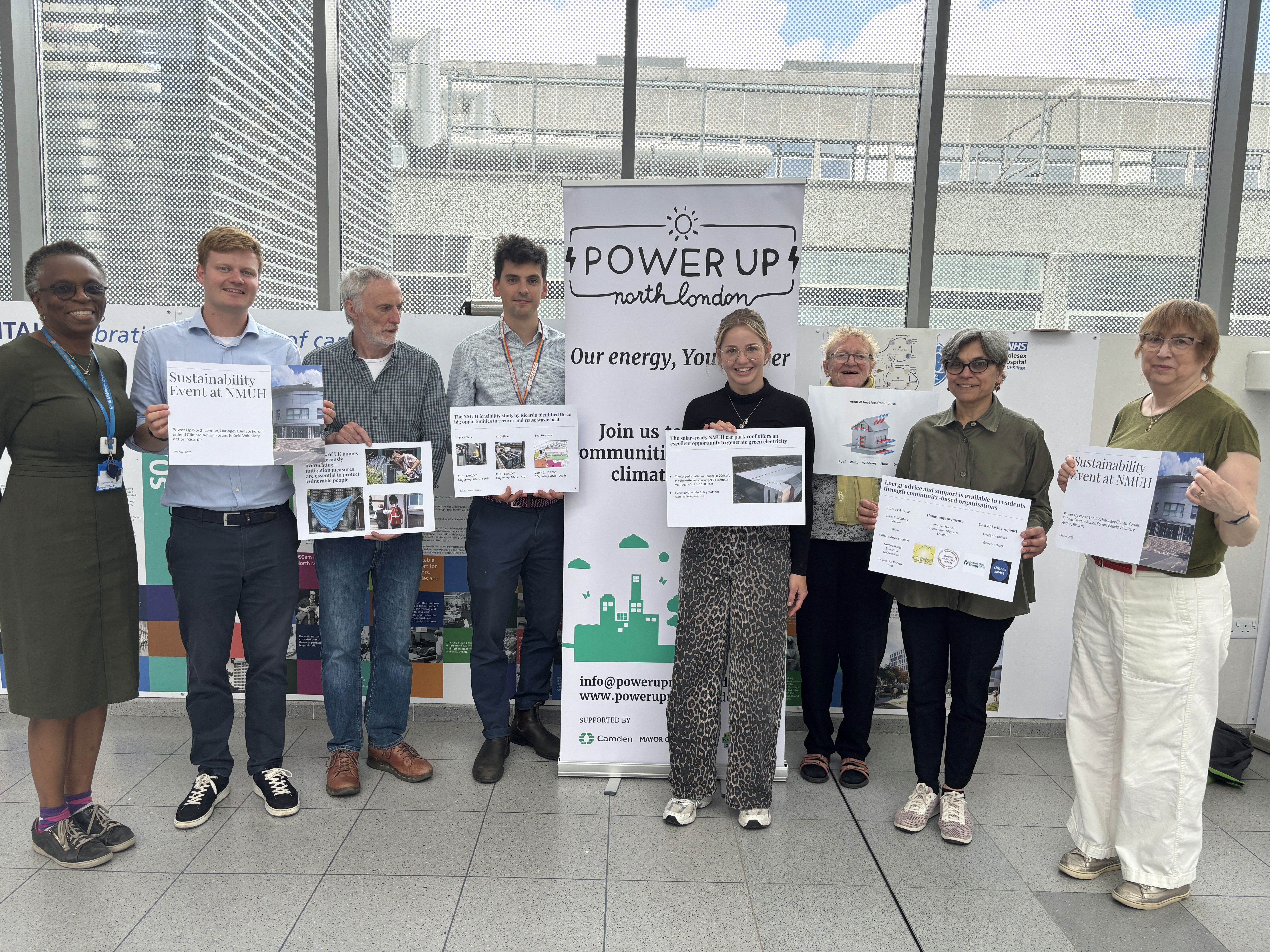
In Spring 2025 Power Up North London completed a feasibility study funded by the Community Energy Fund (CEF) at North Middlesex University Hospital. The technical assessment, carried out by Ricardo, explored how waste heat generated on-site could be captured and reused. The study identified three viable opportunities for heat recovery, each offering significant potential carbon savings, though all would require substantial upfront investment.
The most promising option focuses on recovering waste heat from the hospital’s chillers within its PFI building using a water source heat pump system. This approach would allow surplus heat—currently lost during cooling processes—to be captured and fed back into the hospital’s heating network. If implemented, this system could reduce gas consumption by around 10% and save an estimated 6,681 tonnes of carbon emissions each year—equivalent to the annual heating emissions of approximately 3,100 homes.
While the upfront costs of these solutions are higher than continuing with conventional gas boiler systems, a broader assessment tells a different story. When the social and environmental cost of carbon is taken into account, two of the three options become more cost-effective over time than relying on fossil fuels. This highlights the importance of considering long-term value and climate impact—not just immediate financial cost—when planning energy infrastructure.
Alongside the technical work, PUNL placed strong emphasis on community engagement. We delivered a series of events and workshops focused on overheating, renewable energy, and practical energy-saving advice. These sessions brought together local residents, hospital staff, and stakeholders, helping to raise awareness, share knowledge, and encourage collective action.
The project also strengthened collaboration between PUNL and key local partners, including Haringey Climate Forum and Enfield Climate Action Forum. Building on these relationships, PUNL aims to support further community-led initiatives—scaling up impact and accelerating the transition to a low-carbon future across North London.